

Keywords
How to Cite
Abstract
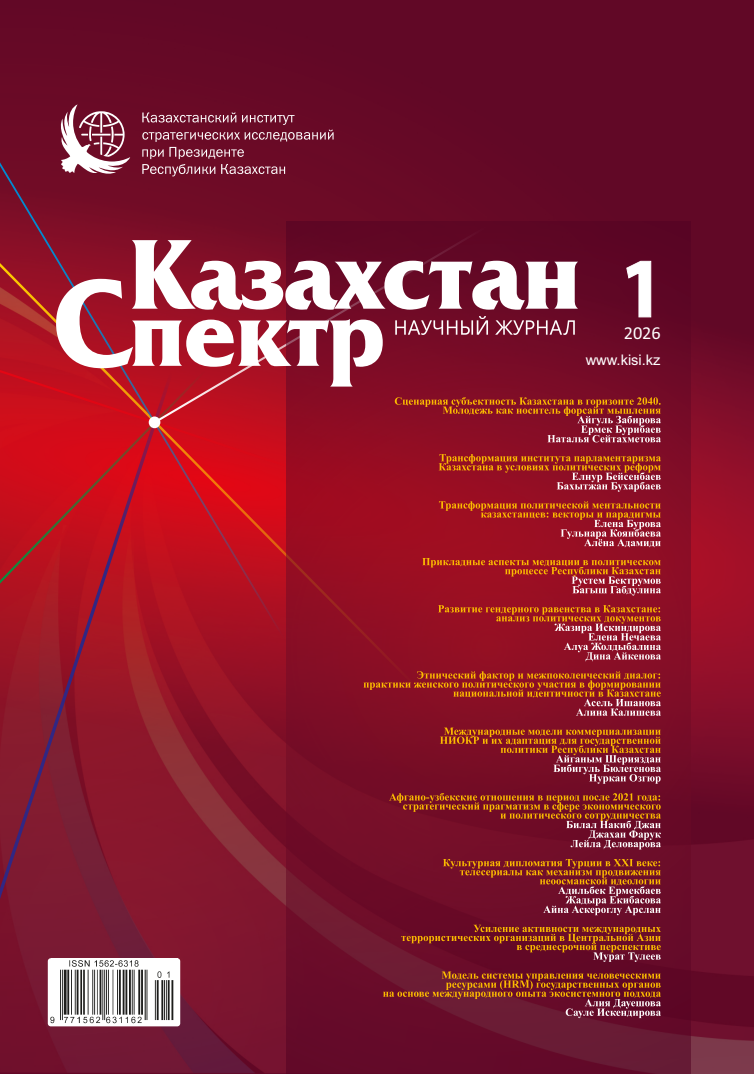
In the context of growing civic engagement, social sensitivity, and political polarization, mediation in the Republic of Kazakhstan is gaining particular importance not only as an alternative form of pre-trial dispute resolution but also as an instrument for institutionalizing public dialogue in politically sensitive contexts. The article analyzes the applied aspects of political mediation in Kazakhstan at three interrelated levels – local, institutional, and national. Special attention is paid to how local incidents – from everyday and ethnocultural disputes to cases of mistrust between the population and local authorities – can escalate into systemic crises in the absence of effective early-response mechanisms. It is argued that political mediation is not merely a conflict resolution procedure but an essential element of sustainable governance and political participation that contributes to reducing tensions, restoring communication, and enhancing the institutional legitimacy of governance. The study emphasizes the importance of a preventive approach, multilevel coordination, cultural sensitivity of mediative practices, and the inclusive involvement of all citizens – regardless of their ethnic, religious, or social background – in peaceful conflict resolution processes. The article concludes that strengthening the mediation infrastructure as a tool of resilience and democratization of public governance is a necessary precondition for long-term political stability.

This work is licensed under a Creative Commons Attribution 4.0 International License.
Copyright (c) 2026 Kazakhstan-Spectrum