

Keywords
How to Cite
Abstract
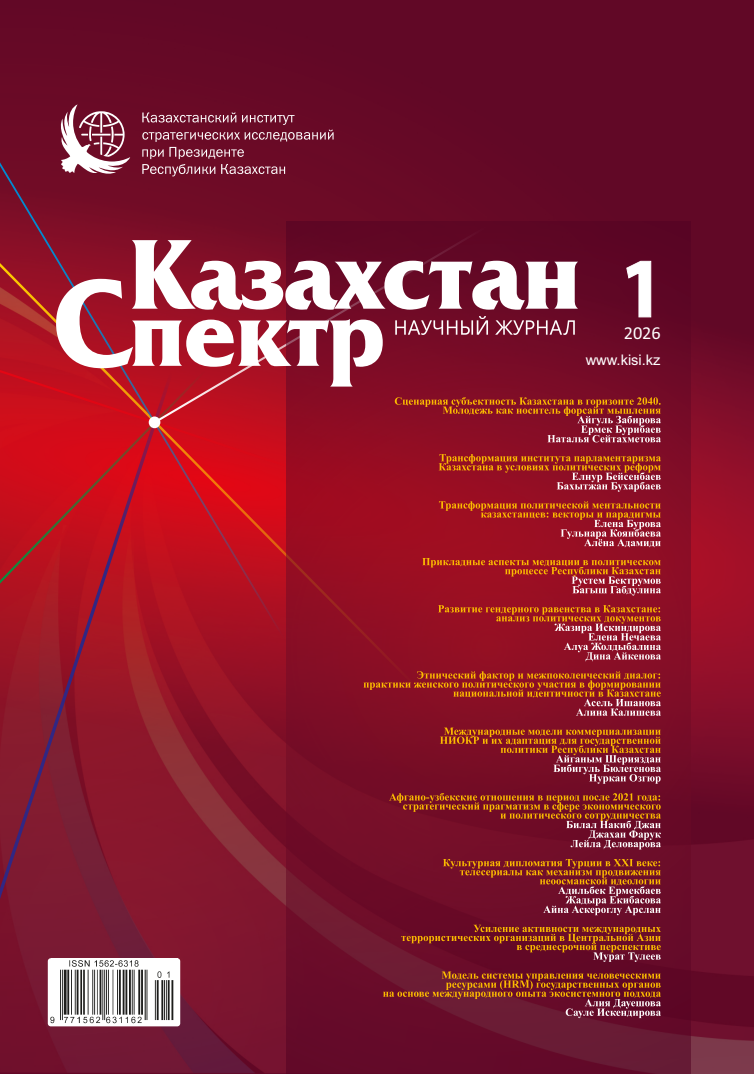
This article analyses the development of gender policy in Kazakhstan, with a focus on two key policy frameworks: the Strategy for Gender Equality (2006–2016) and the Concept of Family and Gender Policy to 2030 (2016–present). These documents define the main directions that have shaped Kazakhstan’s gender policy over the past two decades. The study critically evaluates both frameworks, highlighting their achievements and limitations. It first assesses outcomes associated with the Strategy for Gender Equality and then examines the implementation of the current policy to clarify ongoing priorities and initiatives. The research draws on document analysis and statistical data. It also considers the effects of gender policy across multiple sectors, with particular attention to women’s representation in leadership positions.

This work is licensed under a Creative Commons Attribution 4.0 International License.
Copyright (c) 2026 Kazakhstan-Spectrum